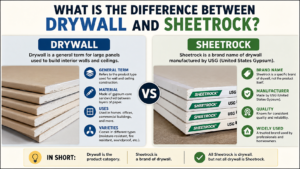
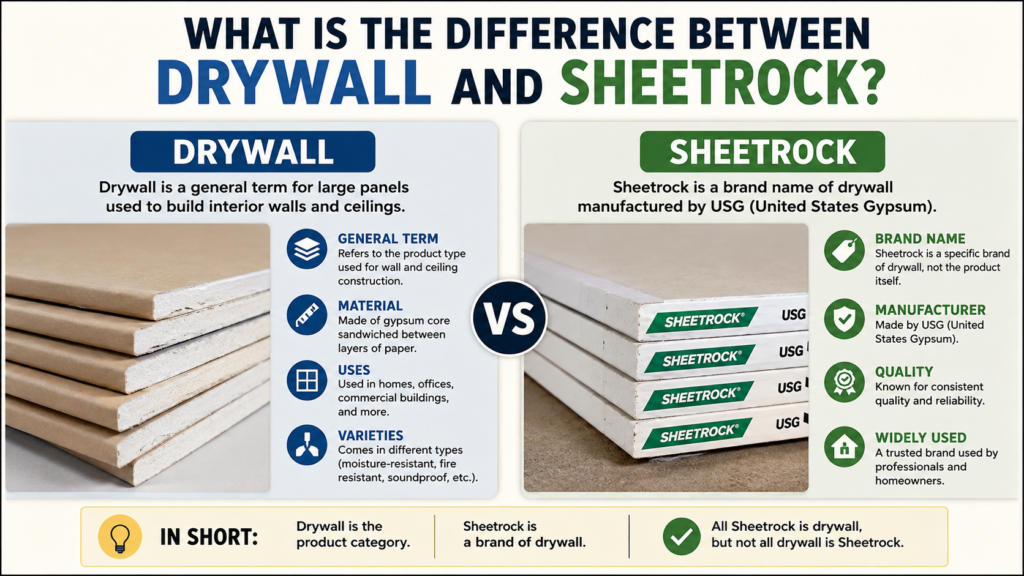
Drywall and Sheetrock are not two different materials. Sheetrock is simply a brand name for drywall. Sheetrock is made by the U.S. Gypsum Company (USG) and was created in the early 1900s. Over time, the brand became so widely used that it became synonymous with the word “drywall” itself, much like how people say “Kleenex” when they mean facial tissue. If you have ever been confused hearing contractors use both terms on the same job site, that is why. Understanding the distinction helps homeowners make smarter decisions about repairs, renovations, and material selection.
Is Sheetrock The Same Thing As Drywall?
Yes, all Sheetrock is drywall, but not all drywall is Sheetrock. Drywall is a wall covering consisting of a hardened gypsum paste sandwiched between two sheets of paper. Sheetrock is simply one manufacturer’s version of that same product. Before drywall became the standard, walls were constructed using layers of plaster applied over lath, a time-consuming and labor-intensive process. Drywall revolutionized construction in the early 20th century by making wall and ceiling installation faster, more affordable, and more consistent. Today, drywall under various brand names is used in virtually every residential and commercial building across the country.
What Makes Sheetrock Different From Generic Drywall Brands?
Sheetrock is known for its manufacturing consistency and quality control. While performance differences between major drywall brands are generally small, many contractors prefer Sheetrock for its reliable quality and product range, making it slightly stronger and more resistant to impacts. Unlike some other brands of drywall, Sheetrock does not emit sulfur odors, which can cause a bad smell, potentially lead to health problems, and corrode metals like the screws contractors use to affix panels to studs. That said, for most standard residential repairs and renovations, the performance difference between Sheetrock and quality generic drywall is minimal.
What Are The Different Types Of Drywall, And When Should Each Be Used?
The more important decision for most homeowners is not which brand to choose, but which type of drywall fits the specific room or application.
Standard Drywall is the most common type used throughout a home. Typically half an inch thick, standard drywall is versatile and cost-effective, suitable for most interior walls and ceilings in residential and commercial applications alike.
Moisture-Resistant Drywall (green board or purple board) is designed for high-humidity areas. Rather than the usual paper facing, the core receives a treated paper or fiberglass mat that resists the migration of water vapor into the gypsum interior, making it the best option for bathrooms, kitchens, and laundry rooms.
Fire-Resistant Drywall (Type X) is required by building code in specific locations. Type X drywall, with its fiberglass-reinforced core, offers up to one hour of fire resistance and is commonly installed in garages, utility rooms, and walls shared between living spaces and attached garages.
Soundproof Drywall is engineered for noise reduction. Composed of laminated drywall made with wood fibers, gypsum, and polymers, soundproof drywall is denser than regular drywall and is most often used where noise is a potential problem, such as home theaters, bedrooms adjacent to common areas, or shared walls in multi-family housing.
Does It Matter Which Brand Of Drywall A Contractor Uses?
For most homeowners, brand matters far less than type and installation quality. When it comes to choosing the brand, the differences are minimal for the majority of people. Multiple other brands of drywall are available for purchase, even though Sheetrock is almost certainly the best known. What matters most is that the right type is used for the right location, that panels are properly cut and hung, and that finishing work, taping, mudding, and sanding, is done with care. Poor installation technique will undermine even premium materials, while skilled workmanship with quality generic drywall produces excellent results.
Choose the Right Drywall for a Repair That Lasts
Whether you are dealing with water-damaged walls, a hole in the garage, or a full room renovation, knowing which drywall type belongs where makes the difference between a repair that lasts and one that fails within a season. Handyman West Houston handles drywall repair and installation across West Houston with over 40 years of hands-on experience selecting and installing the right material for every job. I want you to write a header
FAQs
Can Drywall And Sheetrock Be Repaired The Same Way?
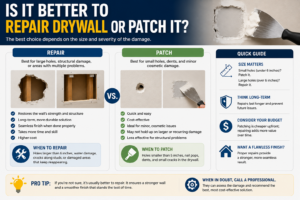
Yes. Because they share the same gypsum core and paper-facing construction, the repair process patching compound, mesh tape, sanding, and priming is identical for both.
What Type Of Drywall Should Be Used In A Houston Bathroom?
Moisture-resistant drywall (green board or purple board) should be used on walls. Shower surrounds and tub enclosures demand cement board or fiber-cement backer board, never drywall of any type.
How Do I Know Which Drywall Type Is Already In My Home?
Standard drywall has white or grey paper facing. Green board has a distinctly green facing. Purple board is purple. Type X fire-rated panels are typically marked on the back with the fire rating stamp.
Does Drywall Thickness Affect Repair Difficulty?
Yes. Thicker panels are heavier and harder to cut cleanly, but they offer better durability and soundproofing. Standard half-inch panels are the easiest to work with for most patch and repair jobs in residential homes.