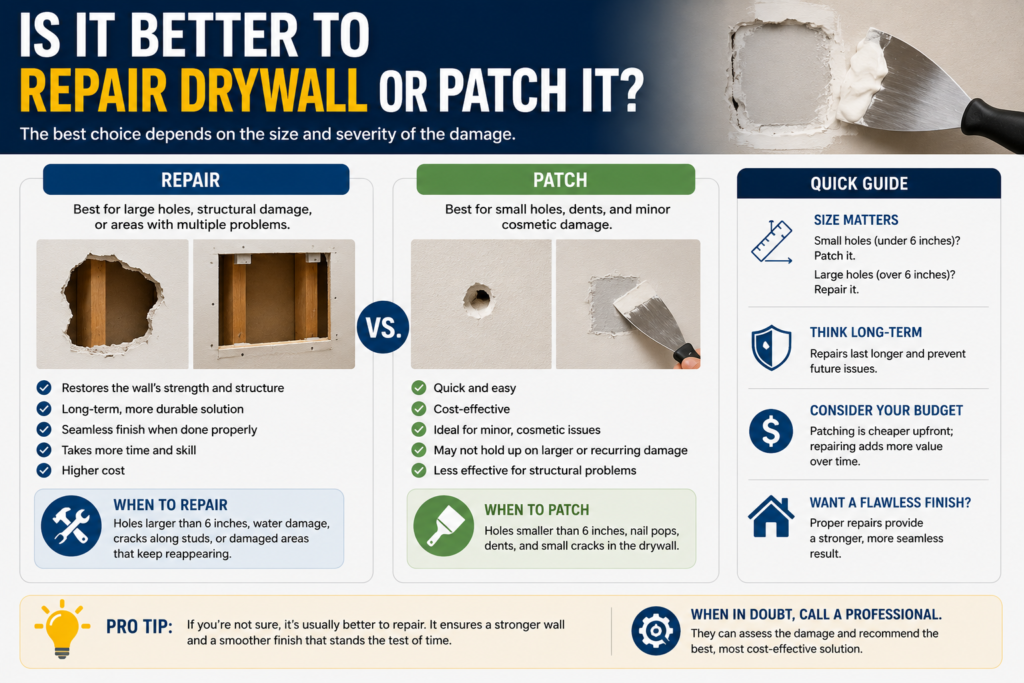
Patching is better for small, isolated damage, while full drywall repair or panel replacement is the right call when damage is large, water-affected, structurally compromised, or involves mold. Choosing the wrong method does not just look bad; it leads to callbacks, recurring problems, and higher costs.
Here is a complete, research-backed breakdown to help West Houston homeowners make the right decision before a single screw is turned.
What Is The Difference Between Drywall Patching And Drywall Repair?
Drywall patching fills or covers a specific damaged area using joint compound, mesh tape, a patch kit, or a cut-in section of new drywall board. Drywall repair is the broader process; it can include patching but also covers panel replacement, texture matching, feathering, priming, and repainting to a seamless finish.
Think of patching as a method within the wider scope of drywall repair. A small nail hole takes a patch. A water-damaged section of wall near a Houston bathroom needs a proper repair, which may involve cutting out the damaged panel, inspecting the framing and insulation behind it, and installing new gypsum board before any finishing begins.
When Is Drywall Patching The Right Choice?
Patching is the right choice when the damage is minor, dry, and structurally contained. Specifically:
Nail holes and screw pops The most common drywall issue in older Houston homes. A nail pop occurs when the nail works loose from the stud behind the wall and pushes the drywall surface outward. A simple spackle or joint compound application, light sanding, and a coat of matching paint resolves it in under an hour.
Small holes under 6 inches Door handle impacts, furniture corners, and minor wall anchors removed incorrectly create holes in this range. A California patch (also called a butterfly patch) or a mesh patch kit reinforced with setting-type joint compound handles these effectively. Surrounding drywall must be solid and dry for a patch to hold long-term.
Hairline cracks, surface cracks along drywall seams or between sheets, are common in Texas homes due to seasonal humidity swings, soil movement, and thermal expansion. If the crack is shallow and does not widen over time, embedding fiberglass mesh tape and applying two coats of all-purpose joint compound followed by feathering and sanding produces a clean, lasting result.
Dents and surface dings Furniture moves, doorknobs swing, and kids play. Shallow surface damage that has not broken through the paper face of the drywall can be filled directly with lightweight joint compound and sanded flush.
When Is Full Drywall Repair Or Panel Replacement The Right Choice?
Full drywall repair involving cut-out and panel replacement rather than surface patching is necessary in the following situations:
When Is Full Drywall Repair Or Panel Replacement The Right Choice?
Full drywall repair using cut-out and panel replacement rather than surface patching is necessary in the following situations:
Holes larger than 6 inches
Large holes weaken the surrounding drywall and typically require a section of the wall to be cut out and replaced. Proper backing, new drywall, seam taping, and finishing are needed to restore strength and appearance.
Water damage
Drywall affected by plumbing leaks, roof leaks, HVAC condensation, or flooding often loses structural integrity and may develop hidden mold. Damaged sections should be removed and replaced after the moisture source has been corrected.
Mold presence
Drywall with visible mold growth should be removed, not patched. Covering mold traps it inside the wall, allowing it to spread and potentially affect indoor air quality. Proper remediation is required before new drywall is installed.
Soft, sagging, or crumbling drywall
If drywall flexes, sags, or crumbles when touched, the gypsum core has deteriorated. Surface repairs will not last, making panel replacement the most reliable solution.
Large structural cracks
Cracks wider than 1/8 inch, diagonal cracks near doors and windows, or recurring seam cracks may indicate foundation movement. The underlying cause should be evaluated and corrected before drywall repairs are completed.
What Does Drywall Repair Cost In Houston, TX?
Houston drywall repair costs depend on damage type, panel size, finish level, and whether texture matching and painting are included.
Based on current 2025–2026 data from completed Houston-area projects:
- Small patch (nail holes, minor dents): $90 to $150 including labor and materials
- Medium patch (½ inch to 6 inches, texture and paint): $150 to $250 per location
- Large panel repair or replacement (water damage, structural): $400 to $800 per location
- Ceiling drywall repair: $400 to $800 without texture and paint; up to $900 for high ceilings or difficult access
- Water damage repair including mold assessment: $600 to $1,550 depending on scope
- Hourly labor: $40 to $60 per hour plus materials, with a first-hour minimum of $90 to $140
Trying to patch damage that actually requires panel replacement inflates the total cost. The patch fails, the problem reappears, and a second professional visit is needed. Getting the assessment right the first time is the most cost-effective outcome.
How Long Does Drywall Repair Take To Dry Before Painting?
Joint compound, the setting type used for patches and repairs, requires a full cure before sanding and painting. Lightweight all-purpose compound dries in 24 hours under normal Houston humidity conditions, but a setting-type compound (such as Durabond 20 or 45) sets chemically in 20 to 45 minutes. Applying paint or primer over incompletely dried compound causes bubbling, cracking, and paint adhesion failure.
In Houston’s humid summer months, drying times extend; adequate ventilation or a dehumidifier speeds the process and prevents the compound from trapping moisture inside the wall.
Frequently Asked Questions
Can you patch over a previous patch that failed?
No. A failed patch must be removed down to solid drywall before reapplying. Layering compound over a loose or soft base causes the repair to crack and separate again.
How do you know if drywall damage is from a plumbing leak vs. normal wear?
Water damage causes stains, softness, or bubbling, while normal wear typically results in clean holes or dents without discoloration.
Do I need to repaint the whole wall after a drywall patch in Houston?
Not always; matching the paint sheen and blending the repair can minimize visibility.
Can drywall in a Houston bathroom be patched like a regular wall?
No, bathrooms require moisture-resistant drywall or cement board to prevent recurring damage.